Want to read miserably but don’t want to be reminded of current world problems? I’ve got you. Here are three books that will give you that icky yucky ugh feeling, but will not remind you of fascism/war/societal regression/technofeudalism/economic recessions anything happening in 2026.
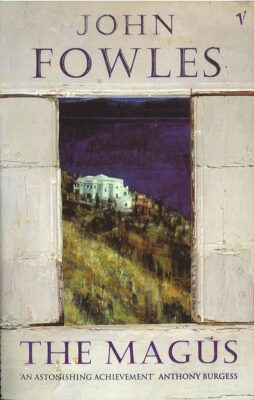
1. The Magus by John Fowles
This is for you if: You want something really fucking weird.
This is not for you if: You don’t want a big, fat book.
What it’s about: Nicholas is an Oxford graduate with no idea what to do with his life. He tries teaching for a bit in an English school, but gets bored. He then gets a job teaching on the Greek island of Phraxos, but gets even more bored. While wandering around the island, contemplating suicide, he stumbles upon the house of a rich eccentric named Maurice Conchis. The two become friends, but what starts off as a life-saving relationship develops into a series of sinister psychological games.
Why I recommend it: This is one of my all-time favourite books (humble brag: I found a first edition of it in a charity shop and it is one of my most prized possessions). It’s an absolute whirlwind from one chapter to the next, and you never know what Conchis is really thinking or planning. It’s a long book, but there are no wasted words, no boring subplots, just the most intense cat and mouse game you’ll ever read. Oh, and the ending is batshit crazy.
My ugh rating: 🥺🥺🥺
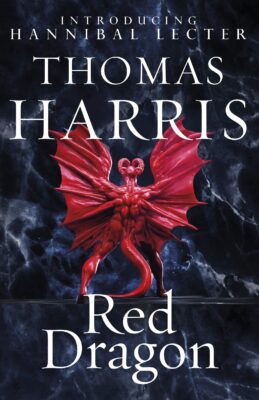
2. Red Dragon by Thomas Harris
This is for you if: You want something fast-paced.
This is not for you if: You’re easily spooked.
What it’s about: Do I really need to describe the plot of Red Dragon?! It’s the first novel in the Hannibal Lecter series and follows Will Graham, an FBI profiler, as he attempts to capture a serial killer nicknamed the ‘tooth fairy’. Problem is, Will believes he needs the help of one of the world’s worst serial killers to do this, a cannibal he caught years before – Hannibal Lecter. Will Hannibal help Will, or will he just try and mess with his mind?
Why I recommend it: I’m not sure why, but when I first read this book I was shocked at how well-written it is. It’s captivating, loads of fun and it’s easy to see why so many movies have been adapted from it – not forgetting the best TV show of all time, of course, Hannibal, which I’ve seen about five times. The characters are well-rounded, the pacing is spot on and Hannibal is the most fascinating villain ever. Sometimes you just need a really good murder book, you know?
My ugh rating: 🥺🥺
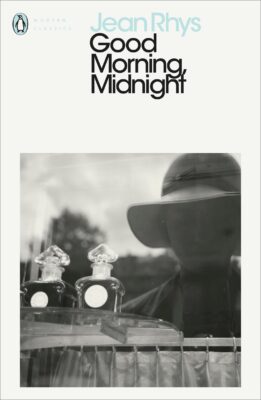
3. Good Morning, Midnight by Jean Rhys
This is for you if: You want something short and enjoy stream of consciousness-style writing.
This is not for you if: You want plot.
What it’s about: As it says above, there’s not too much plot to this. The protagonist is a woman named Sasha who has returned to Paris from England following the death of her baby and the breakdown of her marriage. She is living in poverty and is an alcoholic, and seems to be perpetually yet aimlessly searching for something. Is it love? Safety? Pain? Whatever it is, she can’t seem to grasp hold of it.
Why I recommend it: The suffering in this novel is almost unbearable. Sasha is an incredibly flawed character who makes lots of really bad decisions, but all you’ll want to do is save her from herself. However, what makes the book even more painful is that she doesn’t really want to be saved. Jean Rhys wrote down-and-out woman characters so incredibly well, and each of her stories is a microcosm of the inequalities and lack of agency women had in the 1930s, but Good Morning, Midnight will always be my favourite. I think of Sasha often and hope she’s doing okay, wherever she ended up.
My ugh rating: 🥺🥺🥺🥺🥺
Need even more ‘ugh’ books in your life?
Then try out my novel, These Unnatural Men! It’s about euthanasia, so you’re guaranteed to feel a bit miserable after reading it.
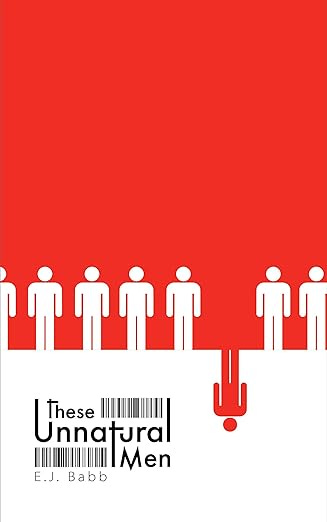
The public call her a cold-blooded murderer. An executioner. A killer for hire.
Nieve Hindeman is a euthanasist.
She is one of hundreds of professionals relieving patients of their pain every day. To her, euthanasia is simply a medical solution to a medical problem.
But when Nieve starts to treat a voluntary patient – a man who is physically healthy but choosing to die – she starts to question the work she does. How can she prove that someone’s desire to die is genuine? Can a patient ever be psychologically terminally ill? And is a life ever not worth saving?

Leave a Reply