Everything I read in March.
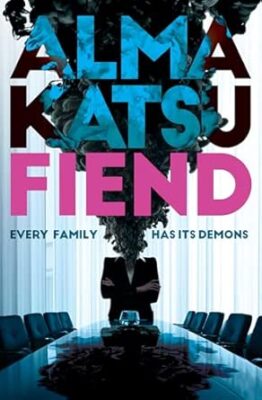
Fiend by Alma Katsu
The Berisha family run one of the largest import-export companies in the world and always seem to come out on top. None of the horrendously evil things they do to succeed come back to bite them. Zef, the patriarch and CEO of the company, is cold and heartless, always keeping his three children, Nora, Maris and Dardan, at arm’s length, both inside and outside the company. He’s also a hiding an even darker secret, one that goes beyond corruption and greed – even beyond our mortal realm.
Fiend is categorised as a horror novel, but a good half of it, maybe even two thirds, focuses solely on the Berisha family dynamics. These chapters mostly jump between Dardan and Maris’ points of view as they navigate their troubled family life and immoral business, as well as their father’s oppressive expectations of them. I really enjoyed this part of the story, especially the different ways in which the two children handle their father’s drive for power.
Then the novel became more of a supernatural horror story and my interest waned considerably. Lazy horror tropes were tagged on at the end of a really good drama about complex and intriguing characters, and I felt a little cheated. A unique set up, but a disappointing ending.
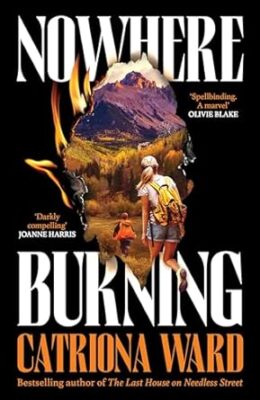
Nowhere Burning by Catriona Ward
Orphans fourteen-year-old Riley and her seven-year-old brother Oliver run away from their abusive cousin’s home after a mysterious girl tells them about Nowhere, an abandoned ranch in the mountains that serves as a refuge for lost children. No adults allowed. Riley and her brother arrive, broken and scared, but they begin to picture a life for themselves living amongst the other traumatised children. Yet there’s something not quite right about their new haven. There’s a dark force at work there, and rather than fear it, the other children seem to worship it as if it will protect them.
I’ve read all of Ward’s novels. I like her unnerving stories and the non-linear narrative she often uses, as well as the way she interweaves elements of magical realism with dark subject matters such as abuse and trauma. However, Nowhere Burning didn’t seem to be at the same level of her other works. The writing was often clumsy; the first chapter in particular could have done with another edit and was not at Ward’s usual standard. The writing picked up in later chapters, but other issues started to creep in – for one the main protagonist, Riley, didn’t seem properly fleshed out, and her little brother was nothing more than a plot device to keep her in Nowhere. Oliver was also used to draw out Riley’s softer side, which was unconvincing, largely because neither sibling seemed to care for the other much.
Each chapter of the novel is written in a different character’s perspective, and while I wished there were less of the Riley chapters, I would have read an entire novel of Marc, a passionate yet self-destructive documentary filmmaker. He was one of the many abused characters in this novel, but he was more than a victim – he also had drive, warmth and depth.
There were lots of moving parts with this novel, and while all the loose ends tied neatly together at the end, I didn’t find it satisfying. There was so much potential with Nowhere Burning – I mean, a novel about a mysterious child-driven cult hidden in the mountains? What’s not to love? But it just didn’t feel ready.
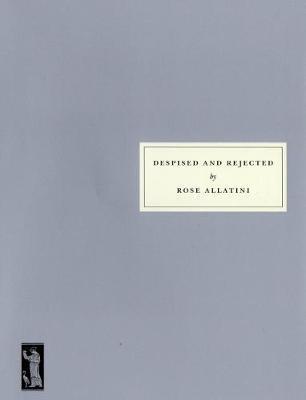
Despised and Rejected by Rose Allatini
The novel begins in a holiday hotel in Devon in 1914. The Blackwood family are waiting for Dennis, the eldest of the three Blackwood children, to join them from his travels around England. Dennis is a composer and the black sheep of the family – too artistic and not masculine enough, according to his father. When Dennis arrives he gets on well with Antoinette, a young woman who is also holidaying at the hotel, and Mrs Blackwood is keen on ensuring the two get better acquainted. But these attempts fail as both have eyes for others – Antoinette has fallen for Hester, a single woman staying at the hotel, and Dennis later falls for Alan, the son of a coal mine owner. This comical story about mismatched love darkens with the eruption of World War I. Dennis is a stark pacifist, and Antoinette joins his group of conscientious objector friends. While the men wait for the inevitable call to war, the group discuss fighting for peace, the importance of art, whether anyone has true autonomy in society, social pressures in England and above all else, the freedom to love who you want to love.
What an astonishingly brave and beautiful novel. I purposefully didn’t read much about it before I started reading; a couple of sentences of the blurb was enough to hook me. What I thought was to be a light and amusing novel about a lesbian woman during a time less accepting than today became one of the most heartbreaking and complex discussions of militarism, socialism, democracy, art and patriotism I have ever read in a novel.
Despised and Rejected felt so modern, so purposeful, so important. Occasionally some passages would remind me it was written over a hundred years ago (e.g. whenever it described suicide as a ‘cowards way out’), but little else was out of step with how I feel about the world today, especially now we are on the brink of a third world war.
This book was banned and the publisher fined not long after its release, and it’s clear why it caused a bit of a stir – it’s urgent, brutal, honest and damning, especially about the government and the way it treats its citizens during times of crisis, but also about homophobia and how suffocating English society can be.
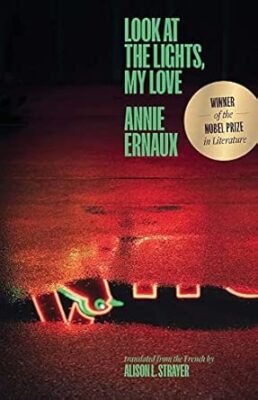
Look at the Lights, My Love by Annie Ernaux
This is a collection of journal entries by Annie Ernaux about her trips to a supermarket. And it made me irate.
Going to the supermarket is a fun trip to the zoo for Ernaux, who clearly thinks anyone who isn’t white or rich is a fascinating specimen that she has the right to observe. At times she tries to excuse or explain her classist and racist views, and that only highlights her bigotry – which is odd, given her political leanings and activism.
Ernaux frequents the supermarket simply to break up the boredom of her day, which is spent writing novels, and she makes unnecessary purchases such as champagne and cheeses because…why not. For some reason she can’t fathom why other shoppers look pained while doing their weekly shop. Why can’t they luxuriate in the experience as she does? Perhaps they should try complimenting the minimum wage workers on how quickly they bag groceries (according to Ernaux, the person she said this to positively beamed in receipt of her praise).
Occasionally Ernaux’s journal entries note how many factory workers in Bangladesh died in preventable incidents while making products for the supermarket she goes to, but in the next entry she returns to her pointless shopping with no further thoughts on the matter. Their deaths are nothing more than an interesting tonal shift.
Overall this is a dull but mercifully short read with nothing to say other than the fact that, after winning the Nobel Prize in Literature, you can pretty much get anything you want published. What a waste of a beautiful title.

Leave a Reply